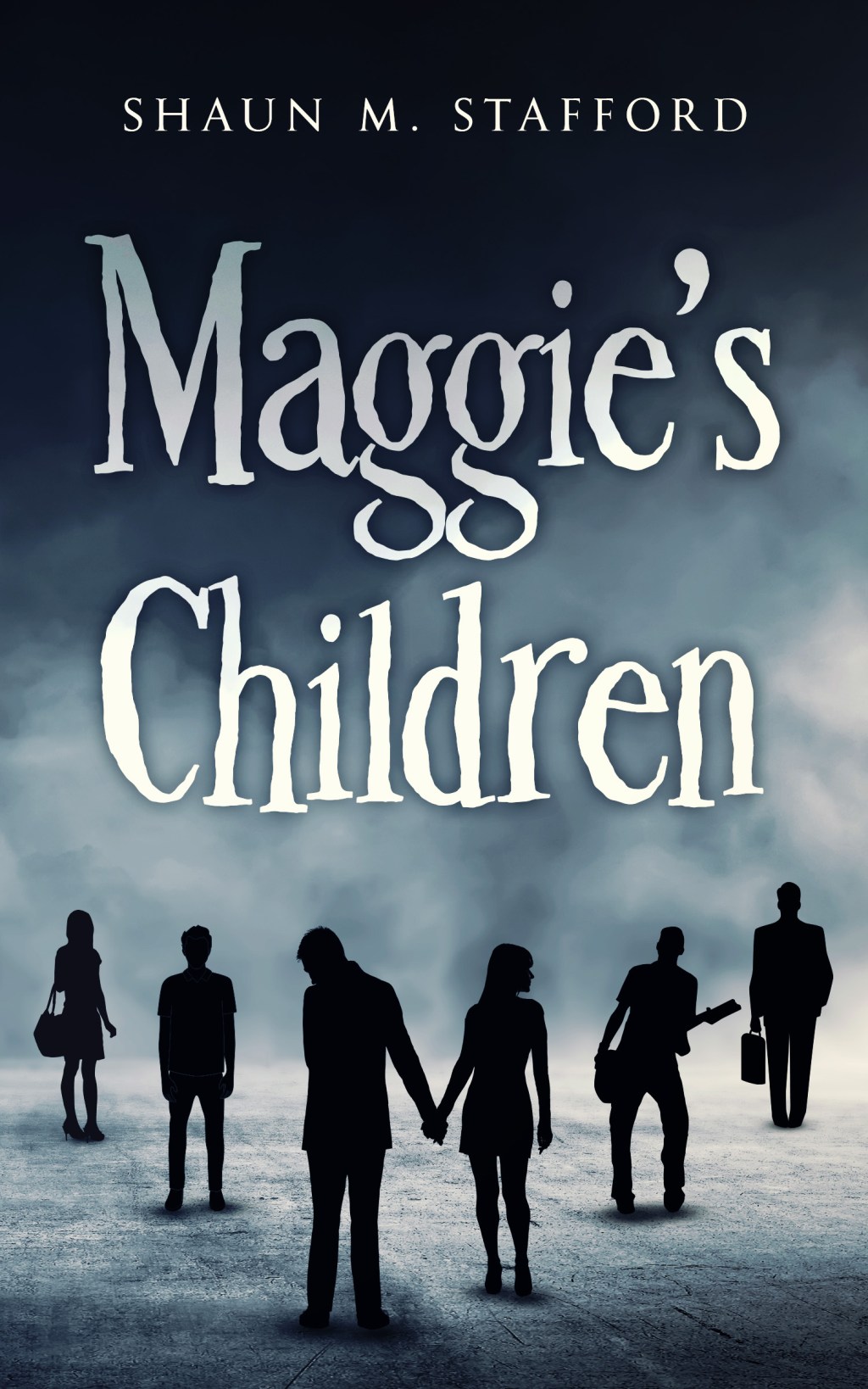

My novel Maggie’s Children is a book without a blurb. I’ve always been rubbish at writing blurbs, and I’ve known for a long time that this particular novel does not have a blurb which adequately sells it.
So what’s Maggie’s Children about? Well, the people on the front cover represent the leading characters, but the main character (he’s the guy holding the woman’s hand) is a man called Saul Castle. And Saul Castle used to be a teacher. The rest of the people on the cover are the people he met at university and with whom he graduated. Since leaving university, they’ve met up once a year for a reunion, and we see how their lives are evolving, getting better or worse. They call themselves Maggie’s Children because they started their working lives when Margaret Thatcher was prime minister of the UK. Their professional lives epitomize the lifestyle of success and wealth encouraged under the Thatcher era.
Saul Castle is in love with one of his university friends, Jo Hipkiss. He’s loved her since their brief relationship at uni, and even after she dumped him, he never stopped loving her. In his early twenties, he marries a colleague from the school where they both teach, and that relationship results in two children. But Saul’s wife suffers from bipolar disorder, and it’s not long before a tragedy rips his life in two.
Maggie’s Children is book two in my trilogy of novels about the problems men face (see also Besotted and Muslamic Ray Gun), and it is undoubtedly the most depressing. Saul’s life dips to a low-point, where he finds himself in prison, and he’s looking for redemption, one which hopefully he will find by the end of the book.
A friend of mine, Tom, who has been with me through my own personal ups and downs, as we used to drink in the same pub (a pub he later took over as landlord), once said to me that Maggie’s Children brought a tear to his eyes, and if something can evoke such emotions, then I’d like to think that, in spite of its very limited sales, the book was, nonetheless, a success.

 Shaun Stafford
Leave a comment